Microsoft confirms Windows 10X is coming to laptops amid big jump in Windows usage


Microsoft is confirming today that it’s planning to refocus Windows 10X on single-screen devices. “The world is a very different place than it was last October when we shared our vision for a new category of dual-screen Windows devices,” explains Panos Panay, Microsoft’s Windows and devices chief. “With Windows 10X, we designed for flexibility, and that flexibility has enabled us to pivot our focus toward single-screen Windows 10X devices that leverage the power of the cloud to help our customers work, learn and play in new ways.”
Microsoft isn’t saying exactly when single-screen devices like laptops will support Windows 10X, nor when dual-screen devices will launch with the OS. However, Windows 10X will launch on single-screen devices first. “We will continue to look for the right moment, in conjunction with our OEM partners, to bring dual-screen devices to market,” says Panay.
Microsoft is reprioritizing Windows 10X for laptops and single-screen devices because of the coronavirus pandemic. The software maker has seen a 75 percent year-over-year increase in the time spent in Windows 10. More people are turning to using their laptops or PCs instead of a smartphone or tablet during the lockdowns we’ve seen worldwide to work or study.
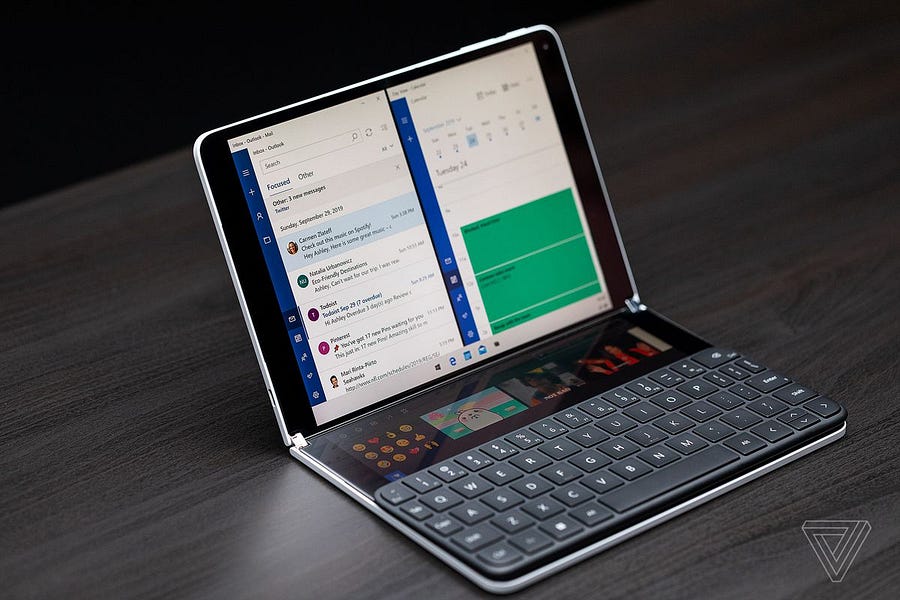
Originally planned for dual-screen hardware like the Surface Neo, Windows 10X includes a more stripped-back, simplified, and modern Windows interface. Microsoft has been working to modernize Windows 10X with some UI and UX changes that improve basics like multitasking, using the Start menu, and quick access to settings.
Microsoft has, to date, only discussed Windows 10X running on dual-screen and foldable computers, but leaks soon after its announcement suggested the streamlined OS would also appear on laptops. Microsoft is not discussing a timeline for its release, though, or whether the dual-screen Surface Neo is delayed beyond 2020 as reports have suggested.

Originally published at https://www.theverge.com on May 4, 2020.

Comments

Popular posts from this blog

Google can now help you figure out that song stuck in your head - all you have to do is hum (or whistle) into your phone

  Google just launched its “hum to search” feature, which allows users to hum, whistle, or sing for 10–15 seconds in order to identify a song. The feature currently works in 20 languages, and Google hopes to add more. Google has finally launched the perfect feature for when a song is stuck in your head but you don’t know any of the words. “Hum to search” launched today on both the Google app for iOS and Android, according to Google’s blog, The Keyword. Users can also whistle or sing directly into the mic to identify a song. The technology works like this: the user can hum (whistle, or sing) for 10–15 seconds, and then Google’s technology takes the song’s melody and turns it into a numbers-based sequence. From there, the sequence can be used to “identify songs based on a variety of sources, including humans singing, whistling or humming, as well as studio recordings,” according to Google’s announcement. The sequence also strips away any other outside noise, like accompanying instru...

Ransomware's Dangerous New Trick Is Double-Encrypting Your Data

  Ransomware groups have always taken a more-is-more approach . If a victim pays a ransom and then goes back to business as usual-hit them again. Or don’t just encrypt a target’s systems; steal their data first, so you can threaten to leak it if they don’t pay up. The latest escalation? Ransomware hackers who encrypt a victim’s data twice at the same time. Double-encryption attacks have happened before, usually stemming from two separate ransomware gangs compromising the same victim at the same time. But antivirus company Emsisoft says it is aware of dozens of incidents in which the same actor or group intentionally layers two types of ransomware on top of each other. “The groups are constantly trying to work out which strategies are best , which net them the most money for the least amount of effort,” says Emsisoft threat analyst Brett Callow. “So in this approach you have a single actor deploying two types of ransomware. The victim decrypts their data and discovers it’s not act...

WhatsApp Users Exchanged Over 100 Billion Messages on New Year’s Eve, A New Record

WhatsApp is one of the most widely used communication apps on the planet and as such, clocks an insane number of messages and media exchanges on a daily basis. But the New Year's Eve broke a record that has been standing since WhatsApp's debut a decade ago. WhatsApp has revealed that users exchanged over 100 billion messages on New Year's eve. And out of that number, more than 20 billion messages were shared by Indian users alone. Moreover, around 12 billion out of the 100 billion+ messages shared on the platform were images. WhatsApp wrote in a press release that over 100 billion messages were shared globally on December 31 in the 24-hour duration leading up to the midnight of New Year's Eve. This is a record-breaking volume and is the highest number of messages exchanged in a single day ever since WhatsApp kicked off its services ten years ago. Out of those 100 billion+ messages shared on New Year's eve, WhatsApp says over 12 billion were images. Meanwhile...